Skip to content
Copy trading is risky in the same way any leveraged retail trading is risky, and for most people it deserves a small allocation, not a core strategy. Regulators including ESMA have warned that stop-loss and copy-stop mechanisms don’t always execute at the price you expect during fast-moving markets. Before copying anyone, pull up their maximum drawdown, not their headline return, and set a stop-copy limit before you fund the account, to limit potential losses.
Key Takeaways
Copy trading amplifies both a lead trader’s skill and their mistakes, and the biggest reductions in risk come from position limits, verified drawdown data, and regulatory disclosure, not from picking a “better” trader.
| Point | Details |
|---|---|
| Drawdown beats headline returns | Always check maximum historical drawdown before allocating to any lead trader. |
| Cap allocation per trader | Limit any single trader to roughly 5 to 10% of total portfolio capital. |
| Verify regulatory status | Confirm the broker discloses fees, methodology, and suitability checks under frameworks like MiFID II. |
| Set automated stop-copy limits | Define a drawdown percentage that halts copying automatically, before emotions take over. |
| Choose platforms with strong execution | Cubomarkets pairs fast order execution and transparent fees with demo accounts for testing copy strategies before funding them live. |
Where to Read More on Copy Trading Regulation and Safety
- ESMA’s supervisory briefing outlines the disclosure and suitability obligations platforms must meet.
- IOSCO’s final report documents global regulatory concerns around imitative trading practices.
- Financial Times reporting shows real investor losses tied to sudden lead-trader strategy shifts.
- A practical safety checklist covers demo-testing and API permission risks in plain terms.
Table of Contents
- Understanding Copy Trading Risks: How the Mechanics Work
- Main Risks: What Can Actually Go Wrong
- Regulation and Disclosure: What Platforms Are Required to Show You
- Risk Management Strategies That Actually Reduce Losses
- How to Choose a Lead Trader or Platform
- How Platform Design Reduces Specific Copy-Trading Failures
- Overconfidence, Herd Mentality, and the Psychology of Copying Someone Else’s Trades
- What Happens to a Copy Trading Portfolio During a Black Swan Event
- Counterparty Risk on Copy Trading Platforms
- System Outages, Data Errors, and Cybersecurity Threats in Copy Trading
- Trade With Controls Built for the Risks Above
- Frequently Asked Questions
- Sources
Understanding Copy Trading Risks: How the Mechanics Work
Copy trading mirrors a lead trader’s positions into your account, proportionally, in real time. Your outcome depends less on your own decisions and more on someone else’s, plus everything that happens in the pipe between their trade and yours.
The flow looks simple on paper:
- The lead trader opens or closes a position.
- The platform detects the change and transmits a signal to every follower account.
- Your account places a mirrored order, sized to your allocation.
That transmission step is where things go sideways. If the lead trader buys a volatile crypto pair during a news spike, a few seconds of lag between their fill and yours can mean you enter at a noticeably worse price. Multiply that gap across dozens of trades a week and the drag adds up quietly.
Main Risks: What Can Actually Go Wrong
The three risks that do the most damage are leverage and margin exposure, sudden shifts in a lead trader’s behavior, and fees that quietly erode returns regardless of performance. Everything else on this list compounds those three.
- Market volatility: Copied positions move with the market just like any trade, and mirrored size means mirrored losses.
- Leverage and margin risk: A lead trader running high leverage can trigger margin calls or forced liquidation in your account too, even if you never chose that leverage yourself.
- Sudden lead-trader strategy changes: Financial Times reporting documents followers losing large portions of their accounts after a trader they copied abruptly switched strategy or ramped up leverage.
- Conflicts of interest: Some lead traders earn commissions or rewards tied to follower count, which can incentivize riskier trading to stay visible on leaderboards, a concern IOSCO has flagged directly.
- Fees and turnover erosion: High-frequency lead traders generate more spread costs and swap fees, which chip away at returns even when the strategy is profitable on paper.
- False diversification: Copying five traders who all hold correlated crypto or tech positions isn’t diversification. It’s concentrated risk wearing a disguise.
- Timing, slippage, and partial fills: Your entry price is rarely identical to the lead trader’s, and during volatile stretches the gap widens.
- Operational and cybersecurity risk: Outages, API failures, and account security gaps sit entirely outside your control.
- Tax and reporting complexity: Every mirrored trade is a separate taxable event in most jurisdictions, and copy trading’s higher turnover means more transactions to track.
Statistic Callout: ESMA’s guidance specifically warns that automated copy trading execution can require a level of investor understanding comparable to portfolio management, and that stop-loss mechanisms are not guaranteed to execute at expected prices during high volatility.
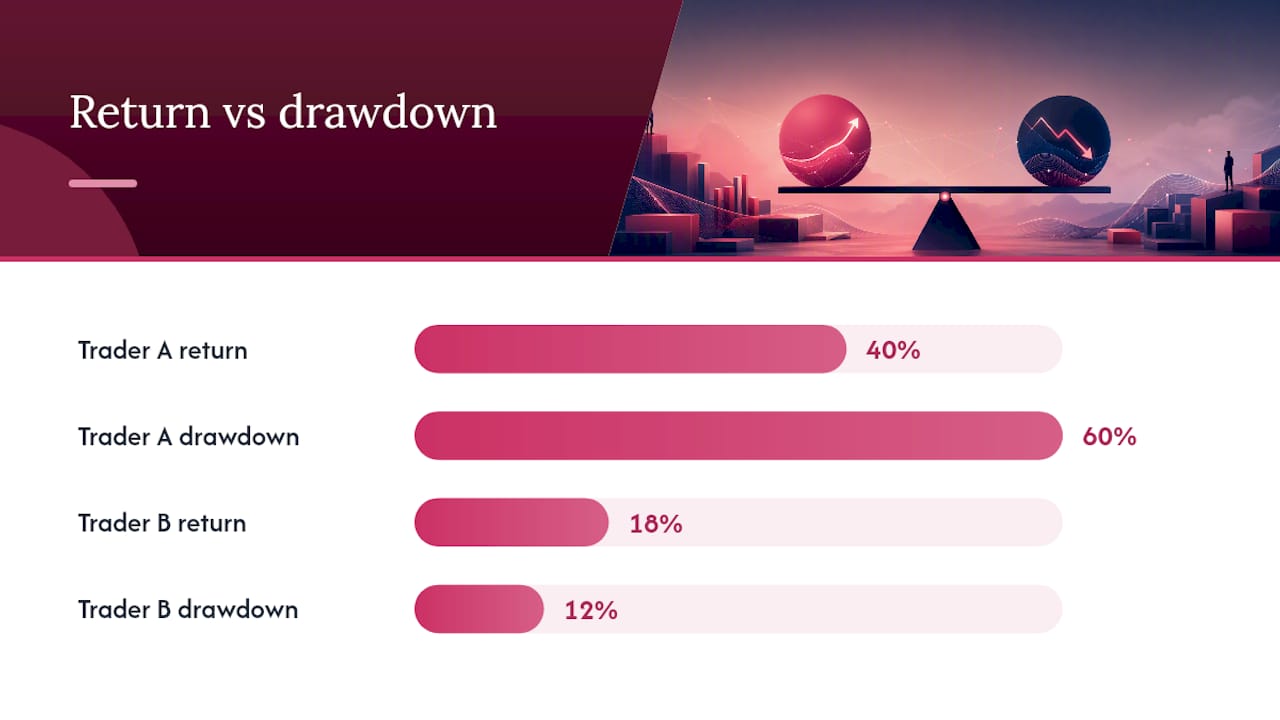
Pro Tip: A trader with a 40% annual return and a 60% max drawdown is far riskier than one with an 18% return and a 12% drawdown. Drawdown tells you how much pain you’ll sit through to earn the gain. Headline returns tell you almost nothing about that.
Regulation and Disclosure: What Platforms Are Required to Show You
Regulated copy trading isn’t a free-for-all. Depending on how it’s structured, it can fall under portfolio management or investment advice rules, which means real disclosure and suitability obligations apply.
Under MiFID II, firms offering copy trading must give marketing that is fair, clear, and not misleading, disclose costs before you trade, and present a balanced picture of risk alongside potential reward. IOSCO’s final report on imitative trading adds a related set of concerns: lead traders who aren’t properly qualified, platforms that skip suitability checks, and pricing or timing risks baked into the replication process itself.
Before you fund an account, check the platform for:
- A verified performance track record, not self-reported screenshots.
- Clear, itemized fee disclosure covering spreads, commissions, and overnight financing.
- A stated methodology and time window for how past performance is calculated.
- A suitability or appropriateness questionnaire during onboarding.
- Sensible stop-copy defaults rather than unlimited, unmonitored mirroring.
Risk Management Strategies That Actually Reduce Losses
The single most effective control is a hard position-size limit paired with an automated stop-copy trigger, set before you ever assign real capital. Everything else refines that foundation.
- Demo test first. Run the strategy on a demo account for at least a few weeks before committing real money.
- Start small per trader. Allocate a modest slice of your capital to any one lead trader, not your full account.
- Set a stop-copy limit. Define a maximum drawdown percentage that automatically halts copying.
- Cap risk per trade. Many disciplined traders limit exposure to roughly 1 to 2% of account equity per position.
- Limit per-trader allocation. A common approach caps any single trader at 5 to 10% of total portfolio value.
- Set a portfolio-wide drawdown ceiling. A 10 to 15% maximum drawdown trigger forces a pause before losses spiral.
- Impose a leverage ceiling. Don’t let a lead trader’s leverage choices exceed what your own risk tolerance allows.
- Check order type defaults. Market orders fill faster but at worse prices during volatility; limit orders protect price but may not fill at all.
- Cross-check with independent signals. Don’t rely on one trader’s judgment as your only input.
- Watch for correlated exposure. Review whether the traders you’re copying are effectively making the same bet.
Pro Tip: Automated rules beat willpower every time. Deciding in advance that you’ll stop copying at a 12% drawdown is a completely different decision than trying to make that call in the moment, with real losses on the screen and adrenaline making the choice for you.
How to Choose a Lead Trader or Platform
Prioritize a verified track record, an honest drawdown profile, and a transparent fee structure over any single number labeled “return.” Those three factors predict long-term outcomes far better than a flashy monthly gain.
Before copying anyone, verify:
- A track record spanning 12 months or longer, ideally through more than one market condition.
- Verified, not self-reported, performance data.
- Maximum drawdown alongside any published risk score or rating window.
- Consistent position sizing rather than erratic bet-sizing.
- Follower growth and turnover, since high churn often signals disappointed copiers leaving quietly.
- A clear, disclosed fee model rather than vague or bundled costs.
Watch for red flags: returns that look suspiciously smooth, unverifiable screenshots instead of platform-audited stats, high follower churn, requests for withdrawal permissions on a connected API, or any promise of guaranteed returns. Consumer research from Which? notes that leaderboard visibility can mask survivorship bias, since underperforming traders quietly disappear from rankings while winners stay visible.
When Copy Trading Is Probably a Bad Fit
Copy trading is a poor match if you have low risk tolerance, can’t monitor positions regularly, or need this money within a short time horizon.
- You’re using funds you might need for emergencies within the next year.
- You’re chasing a viral return you saw on social media rather than a verified track record.
- You can’t financially or emotionally absorb a 15% to 20% drawdown without panic-selling.
MiFID II’s suitability framework exists precisely because copy trading resembles delegated portfolio management, and regulators expect platforms to assess whether it fits your actual risk profile, not just your interest.
How Platform Design Reduces Specific Copy-Trading Failures
Execution quality, fee transparency, and built-in risk controls change outcomes as much as trader selection does. A platform that fills orders fast and discloses costs upfront closes off several of the failure points covered above before they ever become your problem.
Cubomarkets is built around that principle for its own copy trading offering: fast order execution designed to reduce the slippage gap between a lead trader’s fill and yours, transparent spreads with zero commission, demo accounts for testing strategies before funding a live one, and real-time analytics that let you monitor drawdown and exposure rather than just the headline return. A multi-asset platform covering forex, indices, commodities, stocks, and crypto CFDs also gives you room to diversify across asset classes instead of stacking correlated bets across multiple traders.
This is an illustrative example of platform-level risk controls in practice, not a guarantee of any specific trading outcome. No platform, including Cubomarkets, eliminates market or leverage risk.
Overconfidence, Herd Mentality, and the Psychology of Copying Someone Else’s Trades
The riskiest moment in copy trading usually isn’t a bad trade. It’s the emotional reaction after one.
Overconfidence creeps in fast when a copied trader posts a hot streak. You increase allocation, ignore your own stop-copy limit, and start treating a few good weeks as proof of skill rather than luck or favorable conditions. Herd mentality works the same way in reverse: when a trader’s leaderboard ranking climbs and follower count spikes, new copiers pile in near the top of that trader’s run, right before a reversal.
Chasing losses is the most damaging pattern of all. A follower who’s down 8% often doubles allocation to “make it back faster,” which is the exact opposite of what a disciplined trader would do. This mirrors a well-documented behavior in individual trading, except copy trading adds a layer of detachment. It’s easier to rationalize doubling down on someone else’s strategy than your own, because the losses don’t feel like your decisions.
Survivorship bias plays into this too. Platform leaderboards showcase current top performers, but the traders who blew up accounts or quietly underperformed vanish from view. What you’re seeing is a curated, biased sample, not a representative one, and it primes exactly the overconfidence that leads to oversized allocations.
The fix isn’t complicated, even if it’s hard to follow in the moment: decide your rules in advance, write them down, and don’t renegotiate them mid-drawdown.
What Happens to a Copy Trading Portfolio During a Black Swan Event
Sudden market shocks, a flash crash, a surprise central bank move, a geopolitical shock, hit copy trading portfolios harder than manually managed ones for a structural reason: replication lag.

When markets gap violently, the lead trader’s stop-loss might trigger at one price while your mirrored stop triggers seconds later at a materially worse one. ESMA has explicitly warned that stop-loss and copy-stop mechanisms aren’t guaranteed to execute at expected levels during high volatility, which is exactly the scenario where you need them most.
There’s also a concentration problem unique to copy trading. If a popular lead trader was heavily positioned in one direction when a shock hits, every follower copying that trader takes the same hit simultaneously. This isn’t diversified risk spread across independent decisions, it’s one decision multiplied across thousands of accounts. During the market dislocations of recent years, this exact pattern played out with several high-profile lead traders whose followers all absorbed losses together, in near-identical proportion, within the same hour.
Platform infrastructure matters here too. During extreme volatility, order queues back up, and the accounts processed last in the replication chain get the worst fills. If you’re copying a popular trader with thousands of followers, you may be far back in that queue without knowing it.
The practical takeaway: a black swan event doesn’t just test your lead trader’s strategy, it tests the platform’s execution architecture under stress. That’s not something you can evaluate from a leaderboard.
Counterparty Risk on Copy Trading Platforms
Counterparty risk in copy trading isn’t just about the lead trader. It’s about whether the platform itself, and the broker executing your trades, can meet its obligations to you.
Most copy trading operates through CFDs or similar leveraged instruments, meaning your position exists as a contract with the broker rather than direct ownership of an underlying asset. If that broker faces a liquidity crunch, a regulatory suspension, or insolvency, your open positions and account balance are exposed regardless of how well your copied trader performed.
This is why regulatory registration matters more than most new copiers realize. A broker operating under recognized oversight typically maintains client fund segregation, capital adequacy requirements, and reporting obligations that reduce, though don’t eliminate, this exposure. An unregulated or loosely regulated platform offering unusually generous leverage or bonuses is taking on risk that ultimately lands on you.
There’s a narrower counterparty risk specific to copy trading: the lead trader’s own account health. Most platforms don’t require lead traders to cover follower losses if their strategy fails. Principal-protected copy trading models exist on a small number of platforms, but they remain the exception, not the norm. Assume, by default, that a losing strategy is entirely your loss to absorb, not a shared one.
Before connecting real funds, confirm the broker’s regulatory status, where client funds are held, and whether the platform has any history of withdrawal delays or fund segregation issues. This is table-stakes due diligence, not optional caution.
System Outages, Data Errors, and Cybersecurity Threats in Copy Trading
Technical failure is the risk category most copiers never think about until it hits them.
A platform outage during a volatile session can leave your account unable to close a mirrored position while losses run. Data feed errors, a delayed price tick or a stale quote, can trigger a stop-copy at the wrong level or fail to trigger one at all. These aren’t hypothetical edge cases; they’re the routine cost of running automated replication systems at scale, and they tend to cluster exactly when markets are moving fastest, which is when you can least afford a glitch.
Cybersecurity adds another layer. Copy trading often involves connecting accounts through APIs, and any API connection is a potential attack surface. A compromised API key can let a bad actor drain funds or execute unauthorized trades. This is precisely why safety guidance consistently recommends refusing to grant withdrawal permissions to any connected trading API, only trade execution rights, ever.
Native platform copying, where the replication happens inside the broker’s own system rather than through a third-party bridge, tends to reduce these risks compared with webhook or API-based copying tools, since there are fewer handoff points where a signal can be dropped or delayed. That’s not a guarantee against outages, but it does shrink the number of places where something can quietly break.
Practical steps here are simple: use two-factor authentication, never share account credentials, review API permissions regularly, and choose platforms with a visible uptime and incident history rather than one that goes dark during every volatile session.
A Grounded Take on Copy Trading
My honest read after covering this space: treat copy trading like a tool you test and constrain, not a shortcut you trust blindly. Verify the drawdown first, size small, set your automated limits before you fund anything, and never confuse a trader’s confidence for your own edge.
Trade With Controls Built for the Risks Above
Every risk covered here, execution lag, hidden leverage, opaque fees, unreliable stop mechanisms, comes down to one thing: whether your platform’s infrastructure works for you or against you when markets move fast.

Cubomarkets is built around the controls that matter most for copy trading: fast native order execution that narrows the gap between a lead trader’s fill and yours, transparent spreads with zero commission so fees don’t quietly erode your returns, and real-time analytics for tracking drawdown rather than just headline gains. If you want to see how the platform handles these risk factors before committing real capital, start with a demo trading account and test your own stop-copy rules first. This article is educational and isn’t investment advice. Copy trading carries real loss potential regardless of platform.
Frequently Asked Questions
Is copy trading risky for beginners?
Yes. Beginners often lack the experience to judge whether a lead trader’s strategy fits their own risk tolerance, and copy trading’s automation can create a false sense of safety.
What is the biggest risk in copy trading?
Leverage and margin exposure inherited from the lead trader, combined with execution lag during volatile moves, causes the most damage in most documented cases.
How safe is copy trading compared to manual trading?
It carries similar market risk plus additional layers: platform execution risk, lead-trader behavior risk, and counterparty risk tied to the broker itself.
Can you lose more money than you deposit with copy trading?
Depending on the account type and leverage used, losses can exceed your initial deposit in some leveraged CFD accounts, which is why checking margin rules matters before you start.
Do regulators oversee copy trading platforms?
Regulated brokers offering copy trading in relevant jurisdictions must generally meet disclosure and suitability standards under frameworks like MiFID II, though oversight varies by platform and region.
This article is general information, not a substitute for advice from a qualified financial advisor. Consult a qualified financial professional about your own circumstances before acting on anything here.
Sources
- Supervisory Briefing on Copy Trading (ESMA)
- ESMA provides guidance on supervision of copy trading services
- Online imitative trading practices — Copy trading, mirror trading and social trading (IOSCO)
- Copy trading: a road to riches or risk? (Financial Times)