Skip to content
Pip value equals pip size multiplied by your position size, converted into your account currency if the quote currency differs. For a standard lot on EUR/USD, that’s 0.0001 × 100,000 = $10 per pip. Traders need this number to size stop-losses correctly and know their exact profit or loss before a trade moves a single pip.
TL;DR:
- Pip value varies with lot size, currency pair, and exchange rate, requiring careful calculation to determine the correct position size and risk.
- The standard lot pip value on EUR/USD is $10, while on USD/JPY it depends on the current USD/JPY rate, and conversions are needed when trading with a EUR account.
- Always verify pip size, lot definition, and live exchange rates before calculating, and run a manual check to prevent errors from calculator or rate mismatches.
- Proper pip value management helps you accurately size stops and avoid overexposure, especially when spreads widen or execution quality changes unexpectedly.
- Leverage does not affect pip value or the dollar amount at risk, so focus on precise calculations to manage risk effectively regardless of margin.
Table of Contents
- How Do You Calculate Pip Value Step by Step?
- Worked Examples: EUR/USD, USD/JPY, and Currency Conversion
- How Do You Use a Pip Value Calculator Correctly?
- How Does Pip Value Determine Position Size and Risk?
- What Pitfalls Change Pip Value Without You Noticing?
- Why We Treat Pip Value as a Pre-Trade Habit, Not a One-Time Lesson
- Sources
How Do You Calculate Pip Value Step by Step?
A pip is the smallest standard price move in a currency pair. For most pairs, that’s 0.0001. For pairs quoted in Japanese yen, the pip size jumps to 0.01 because yen pairs carry two decimal places instead of four. Miss that distinction and every downstream calculation is off by a factor of 100.
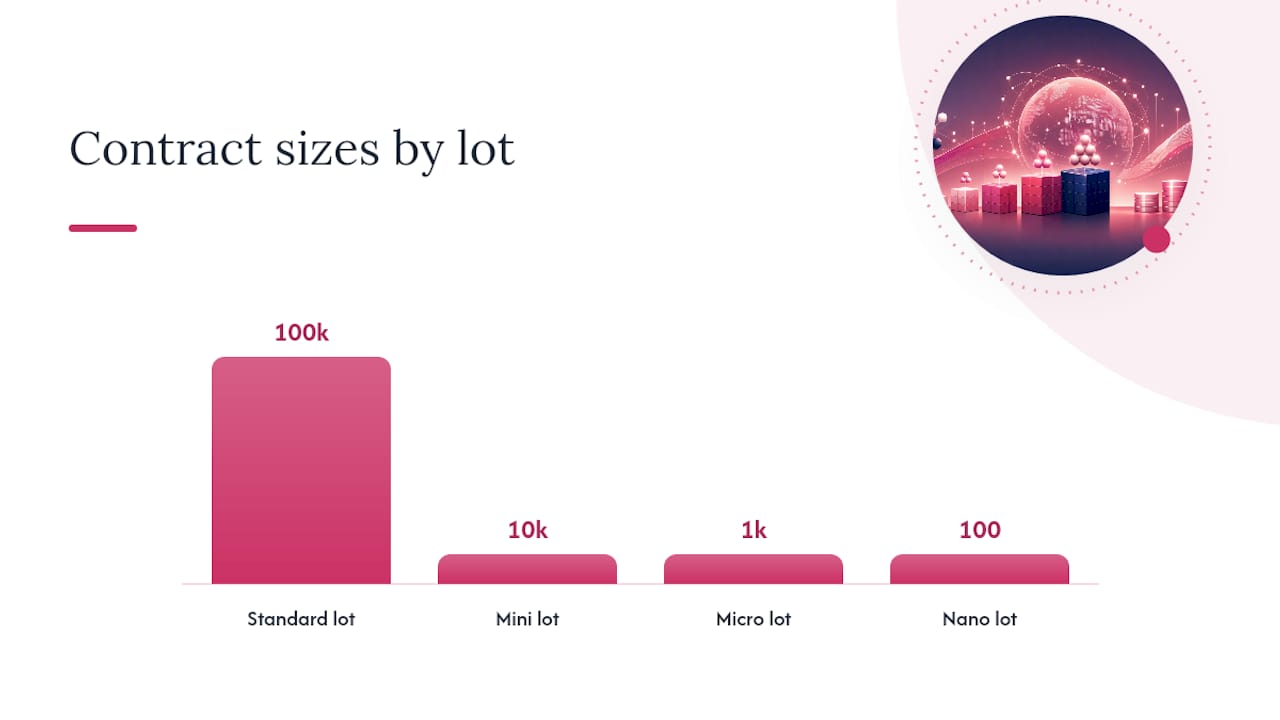
Lot size is the other half of the equation. A standard lot is 100,000 units of the base currency. A mini lot is 10,000, a micro lot is 1,000, and a nano lot (offered by some brokers) is 100. Pip value scales directly with whichever size you trade.
The core formula:
Pip value per lot = pip size × contract size
Then:
Pip value for your position = pip value per lot × number of lots
If the quote currency isn’t your account currency, you convert by dividing or multiplying by the current quote→account exchange rate.
Here’s the manual process, step by step:
- Identify the pip size for your pair (0.0001 or 0.01 for JPY pairs).
- Confirm your position size in lots or units.
- Multiply pip size by contract size to get pip value per standard lot.
- Multiply that figure by your actual lot size.
- If needed, convert the result from the quote currency into your account currency using the live exchange rate.
A few things worth keeping straight while you work through this:
- Pip size never changes based on lot size, only the currency pair.
- Contract size is set by your broker’s lot definitions, not the market.
- Conversion direction matters. Multiply when your account currency is stronger relative to the quote currency’s rate structure, divide when it isn’t. Check the math against a known example before trusting it live.
Worked Examples: EUR/USD, USD/JPY, and Currency Conversion
Numbers make this concrete. Here’s how the formula plays out across three common scenarios.
On EUR/USD, a standard lot pip value comes to $10 because 0.0001 × 100,000 = 10, and the quote currency (USD) already matches a USD account. A mini lot drops that to $1 per pip, and a micro lot brings it down to $0.10 per pip.
On USD/JPY, a standard lot gives you 0.01 × 100,000 = 1,000 JPY per pip. If your account is funded in USD, you then divide 1,000 by the current USD/JPY rate. That results in a USD equivalent per pip, varying with the rate.
Now the trickier case: a EUR-denominated account trading EUR/USD. The pip value starts in USD, so you divide by the EUR/USD rate to convert. At a rate of 1.0800, $10 per pip becomes €9.26 per pip.
| Position | Pair | Pip Value (Quote Currency) |
|---|---|---|
| Standard lot (100,000) | EUR/USD | $10 |
| Mini lot (10,000) | EUR/USD | $1 |
| Micro lot (1,000) | EUR/USD | $0.10 |
| Standard lot (100,000) | USD/JPY | 1,000 JPY |
A 20-pip stop-loss on one standard EUR/USD lot puts a substantial amount at risk. On a micro lot, that same 20-pip stop risks proportionally less. That gap is why lot sizing, not just stop distance, determines how much room you actually have to be wrong.
How Do You Use a Pip Value Calculator Correctly?
A calculator needs three inputs at minimum: your account currency, the currency pair, and your position size in lots or units. Most also let you toggle a live exchange rate, which matters more than people assume since conversion rates shift throughout the trading day.
Many tools include a “Solve” mode that flips the math around. Instead of telling you the pip value for a given lot size, it calculates the lot size needed to hit a target pip value, useful when you’re budgeting risk in dollars first and working backward to a position size.
Before trusting any calculator’s output, run through this:
- Confirm the pip decimal is set correctly. JPY pairs need 0.01, not 0.0001.
- Make sure the rate feed is live, not cached from an earlier session.
- Verify the contract size matches your broker’s actual lot definition.
- Double-check the conversion direction. Reversing it produces numbers that look plausible and are still wrong.
Pro Tip: Run one manual calculation by hand before trusting a calculator’s output for the rest of the session. If your math matches the tool, you can move faster the rest of the day. If it doesn’t, you just caught a setup error before it cost you money.
Standard, mini, and micro lot values usually appear side by side on most calculators, which makes it easy to spot-check whether your intended position size lines up with your actual risk tolerance.
How Does Pip Value Determine Position Size and Risk?
Pip value is what turns a stop-loss distance into an actual dollar figure. The formula:
Money at risk = pip value × stop-loss (in pips) × number of lots
This is also how you size a position to risk a fixed percentage of your account instead of guessing.
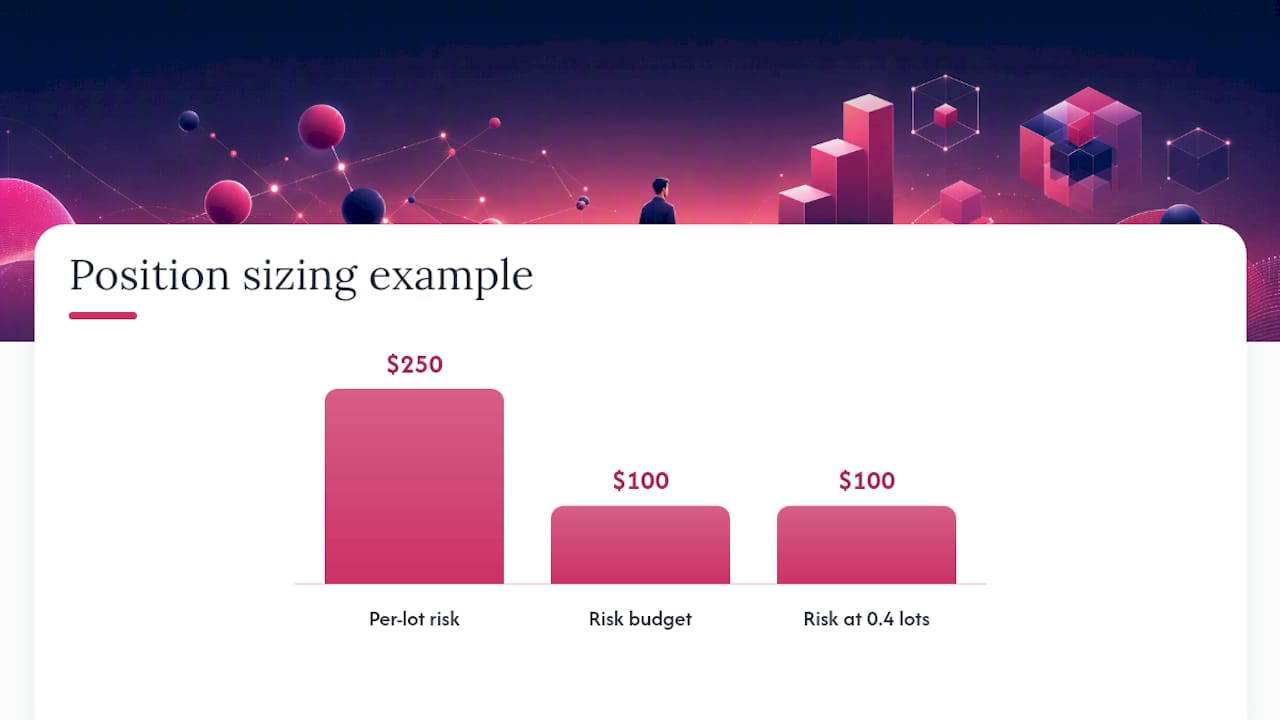
Standard lot pip value is $10, so 25 pips × $10 = $250 per lot, too much for a $100 risk budget. Dividing $100 by $250 gives 0.4, meaning you’d trade 0.4 standard lots (four mini lots) to stay within your risk limit.
Leverage doesn’t factor into this at all. Leverage changes how much margin you need to open the position; it has no effect on what a pip is worth or how much you lose if the trade goes wrong. Traders conflate the two constantly, and it’s a costly mix-up.
Before entering a trade, run this checklist:
- Confirm pip value for your exact lot size and pair.
- Set your stop-loss distance in pips.
- Multiply to get total money at risk.
- Compare that figure against your account risk limit (commonly 1 to 2%).
- Adjust lot size, not stop distance, if the numbers don’t fit.
What Pitfalls Change Pip Value Without You Noticing?
Pipettes trip up more traders than the core formula ever does. A pipette is one tenth of a pip, shown as a fifth decimal place on most pairs and a third decimal on JPY pairs. It affects how tightly spreads get quoted, not the value of a full pip, so your pip-value math stays the same even when the price feed shows that extra digit.
Cross pairs add another layer. When neither currency in the pair matches your account currency, you often need a two-step conversion: convert the pip value from the quote currency into a common intermediary, then into your account currency. Skipping a step here is a common source of miscalculated risk.
A few habits worth building in:
- Compare a spread quoted in pipettes against historical whole-pip spreads by dividing by 10 first.
- Never copy a rate from a chart screenshot into a manual calculation. Rates move, and a stale number produces a stale risk figure.
- Recheck contract size any time you switch instruments or brokers, since definitions aren’t universal.
Pro Tip: Screenshot your broker’s contract specifications page once and keep it open in a second tab. It settles decimal and lot-size arguments with yourself faster than searching for it mid-trade.
Why We Treat Pip Value as a Pre-Trade Habit, Not a One-Time Lesson
Checking pip value before every trade does more than confirm your math. It exposes when spreads have widened or execution has slipped, since a pip that should be worth $10 suddenly costing more in effective spread is a signal worth noticing, not ignoring. Traders who treat pip-value checks as a transparency tool rather than a formality tend to catch execution problems earlier.
This is part of why execution quality and spread consistency matter as much as the arithmetic itself. Some trading platforms emphasize tight spreads and fast order execution specifically because pip-value sensitivity compounds on every trade, not just the large ones.
Add pip-value verification to your pre-trade routine the same way you check your stop-loss. It takes seconds and it catches the errors that cost real money.
Ready to trade with pricing built for pip-sensitive strategies? Open a trading account with Cubomarkets and see the spread difference for yourself.
Cubomarkets believes precise pip-value math means nothing if your broker’s execution erodes it. Verify the calculation, then verify the platform behind it.
— Cubo
This article is general information, not a substitute for advice from a qualified financial advisor. Consult a qualified financial professional about your own circumstances before acting on anything here.
Sources
- Pip Calculator – Myfxbook
- Pip Calculator – BabyPips
- Forex Pip Value Calculator – Pip Value for Every Major & Cross | ForexMechanics
- Pip Value Calculator (MiniWebTool)