Skip to content
A margin call is your broker telling you that your account equity has dropped below the required maintenance level, and you now have to fix it. You fix it by depositing cash or securities, or by cutting positions to free up equity. Ignore it, and the broker can liquidate your holdings without waiting for you to respond, sometimes triggering a separate, harsher event called a stop-out.
TL;DR:
- Margin calls are triggered mainly by losses eroding equity, opening trades that create immediate deficits, broker increases in house requirement, or sharp asset volatility.
- Brokers can sell your securities without notice once your margin level falls to the stop-out threshold, which varies but commonly involves partial or full automatic liquidation.
- You have three ways to meet a margin call: deposit cash, add marginable securities, or sell positions to reduce used margin, with prompt action being critical.
- Keeping a cash cushion at least 1.5 times the maintenance margin and using automatic stop-loss orders help prevent margin calls before they occur.
- Trading with tools that offer real-time margin tracking and fast execution can significantly reduce the risk of costly delays during margin emergencies.
Table of Contents
- Margin Call Explained: How Margin Accounts Actually Work
- What Triggers a Margin Call
- Margin Call vs. Stop-Out: Two Different Events
- How Brokers Respond and Whether You Get Any Notice
- How to Meet a Margin Call Before the Broker Acts for You
- How to Avoid Margin Calls in the First Place
- Cubo’s View on Managing Margin Risk
- Trade With Tools Built for Fast Margin Decisions
- Where These Numbers and Rules Come From
- Sources
Margin Call Explained: How Margin Accounts Actually Work
Every margin account runs on three numbers: equity, used margin, and maintenance margin. Equity is your account value after gains and losses. Used margin is what’s locked up backing your open trades. Maintenance margin is the minimum equity your broker requires you to hold against that exposure.
Say you deposit $2,000 and open positions using $1,000 of margin.
- Initial margin is what you need to open a trade.
- Maintenance margin is what you need to keep it open.
- FINRA allows firms to set house requirements stricter than regulatory minimums, so your actual threshold may be tighter than the textbook number.
What Triggers a Margin Call
Margin calls rarely come out of nowhere. Four situations account for almost every case.
- A losing position erodes equity. A stock, currency pair, or futures contract moves against you, and your equity drops relative to used margin.
- A new trade creates an immediate deficit. Opening a position that requires more margin than your account currently supports can trigger a call the moment you click buy.
- The broker raises its house requirement. Firms often increase maintenance requirements on volatile stocks, low-liquidity crypto, or concentrated positions, sometimes overnight, without your trade activity changing at all.
- Volatility spikes on a concentrated bet. Holding one asset class heavily, say a single tech stock or one currency pair, means a single sharp move can blow through your cushion fast.
A trader holding a diversified basket rarely gets blindsided this way. Someone holding one leveraged crypto position through an earnings-style news event is the classic setup for a surprise call.
Margin Call vs. Stop-Out: Two Different Events
A margin call is a warning. A stop-out is the broker acting without asking. Stop-out is an automatic liquidation that fires once your margin level falls to a second, lower threshold, and it typically closes your worst-performing positions first to stop the bleeding fastest.
Thresholds vary by broker and even by account type, but the pattern below is typical for retail forex and CFD accounts.
| Margin level | What happens |
|---|---|
| A broker-defined maintenance threshold | Margin call issued, action requested |
| About half that level | Many brokers begin partial forced closures |
| A significantly lower broker-defined stop-out level | Full stop-out common on many platforms |
You do nothing. The broker starts closing trades.
How Brokers Respond and Whether You Get Any Notice
Don’t count on a grace period. The SEC is explicit that brokers can sell your securities without contacting you first, because the margin agreement you signed already grants that right.
- Some firms extend two to five business days informally, but this is a courtesy, not an obligation.
- You typically don’t get to choose which positions get sold. The broker picks.
- You aren’t entitled to a specific time frame to raise cash, even if you’ve met every call before.
- Regulatory minimums set a floor, but firms monitor accounts intraday and can act faster than the rules technically require.
Treat every margin call as though liquidation could happen within minutes, not days.
How to Meet a Margin Call Before the Broker Acts for You
Once you’re called, you have three real options, and the clock matters more than the method.
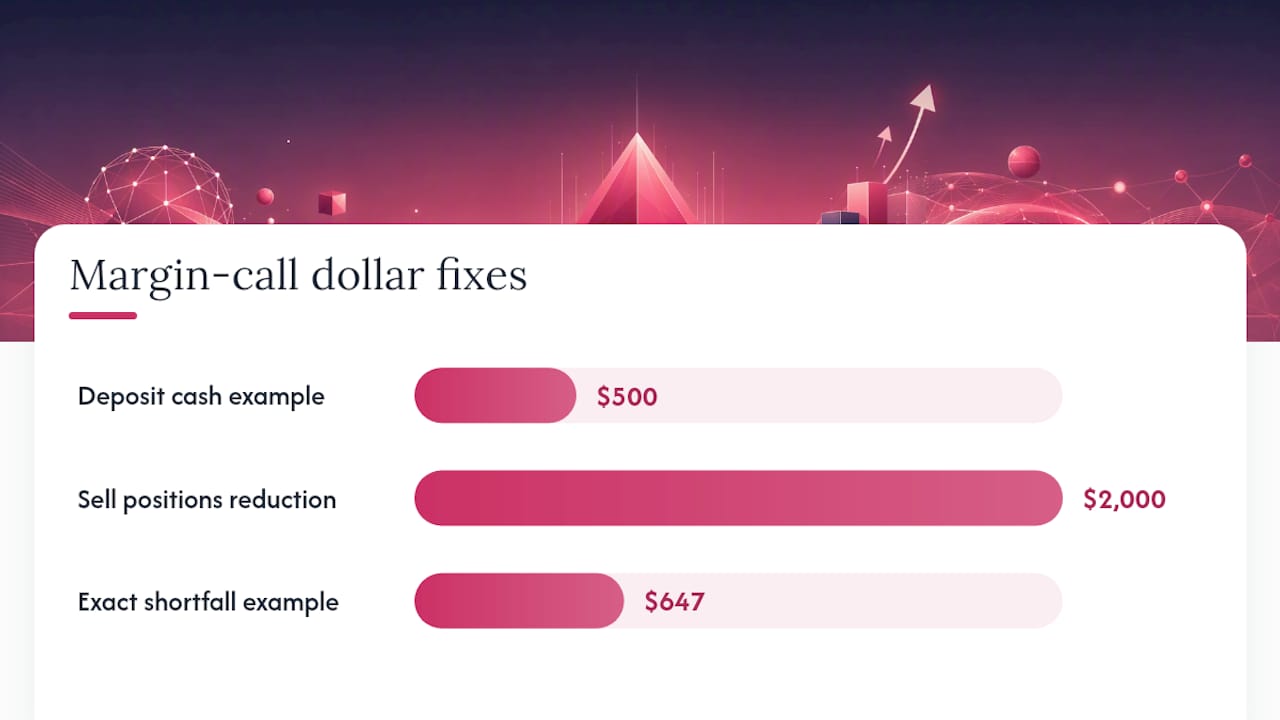
- Deposit cash. Fastest and cleanest. If you need your margin level back to 150% and you’re short $500 in equity, wiring that $500 usually clears the call immediately.
- Deposit marginable securities. Fidelity outlines this path for accounts holding other qualifying assets. The broker credits equity based on the security’s value against its own margin percentage, not its full market price.
- Sell positions to reduce used margin. If maintenance margin is 25% and you need to cut your exposure by $2,000 to restore your ratio, selling enough to reduce used margin by roughly that amount typically resolves it.
Pro Tip: Calculate the exact dollar shortfall before calling your broker. Knowing you need $647, not “a few hundred dollars,” gets the call resolved in one conversation instead of three.
Checklist: deposit funds, cut exposure, contact your broker directly, and set protective orders on anything you keep open.
How to Avoid Margin Calls in the First Place
Meeting a call is damage control. The better game is never getting one.
- Keep a cash cushion above your broker’s minimum, not just at it. Many experienced traders set a personal warning trigger around 1.5 times the maintenance requirement, giving themselves room to act before the broker does.
- Use stop-loss orders on every leveraged position. Cutting losses automatically beats waiting to see if a trade recovers.
- Reduce leverage on volatile assets. Crypto and low-liquidity small caps deserve smaller position sizes than blue-chip stocks or major currency pairs.
- Avoid stacking your entire account into one correlated bet. Diversified collateral absorbs a bad day better than a single concentrated position.
- Run margin-calculator scenarios weekly, not just when a trade already looks shaky.
That gives you a window to act on your own terms instead of the broker’s.*
Cubo’s View on Managing Margin Risk
Margin calls punish slow reactions. Execution speed and tight spreads matter most in the exact moment you’re trying to cut a losing position before it worsens, and Cubomarkets is built around minimizing that lag. We also think traders underuse the basics: house policies, calculators, and customer due diligence standards exist to protect your account, not slow you down. Review your margin settings before you need to, not after.
— Cubo
Trade With Tools Built for Fast Margin Decisions
When a margin call hits, the account that saves you money is the one that lets you act in seconds, not minutes. A trading platform with competitive spreads and commission structures can help ensure cutting a losing position to restore your margin level doesn’t cost you extra on the way out.

Cubomarkets supports MetaTrader 5 alongside WebTrader, with real-time analytics that show your margin level as it moves, not after the fact. Whether you trade forex, commodities, or crypto, the same fast execution applies across every asset class. Open a trading account and check your margin settings before your next trade, not after your next call.
Where These Numbers and Rules Come From
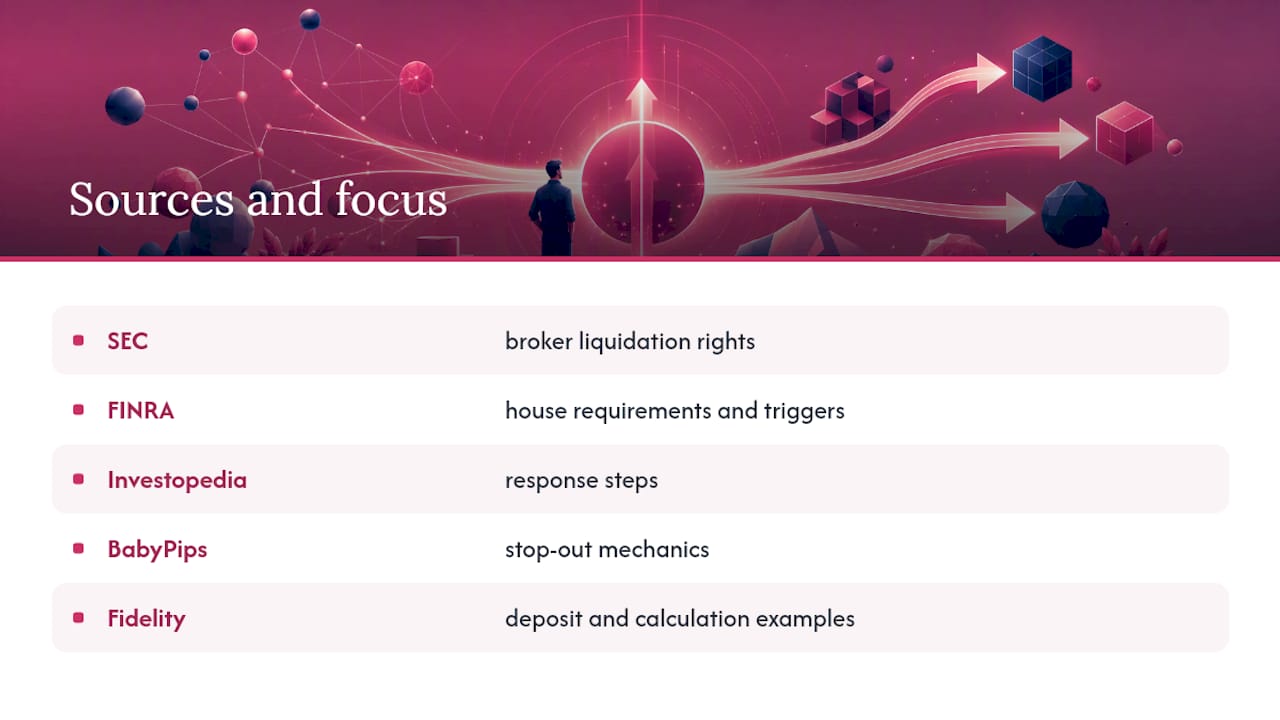
The SEC covers broker liquidation rights, FINRA explains house requirements and triggers, Investopedia breaks down response steps, BabyPips details stop-out mechanics, and Fidelity offers deposit and calculation examples.
This article is general information, not a substitute for advice from a qualified financial advisor. Consult a qualified financial professional about your own circumstances before acting on anything here.
Sources
- Understanding Margin Calls: What Triggers Them and How to Respond — Investopedia
- Know what triggers a margin call — FINRA
- Margin: Borrowing Money to Pay for Stocks — SEC
- What is a stop-out level? — BabyPips